
The Invisible Restaurant Problem — And How to Fix It with Local SEO
https://uploads.prod01.sydney.platformos.com/instances/647/assets/modules/homepage/webapp_uploads/blog/images/the-invisible-restaurant-problem-and-how-to-fix-it-with-local-seo1920cjpg1773216051800-1773216053092.jpg?updated=1792410135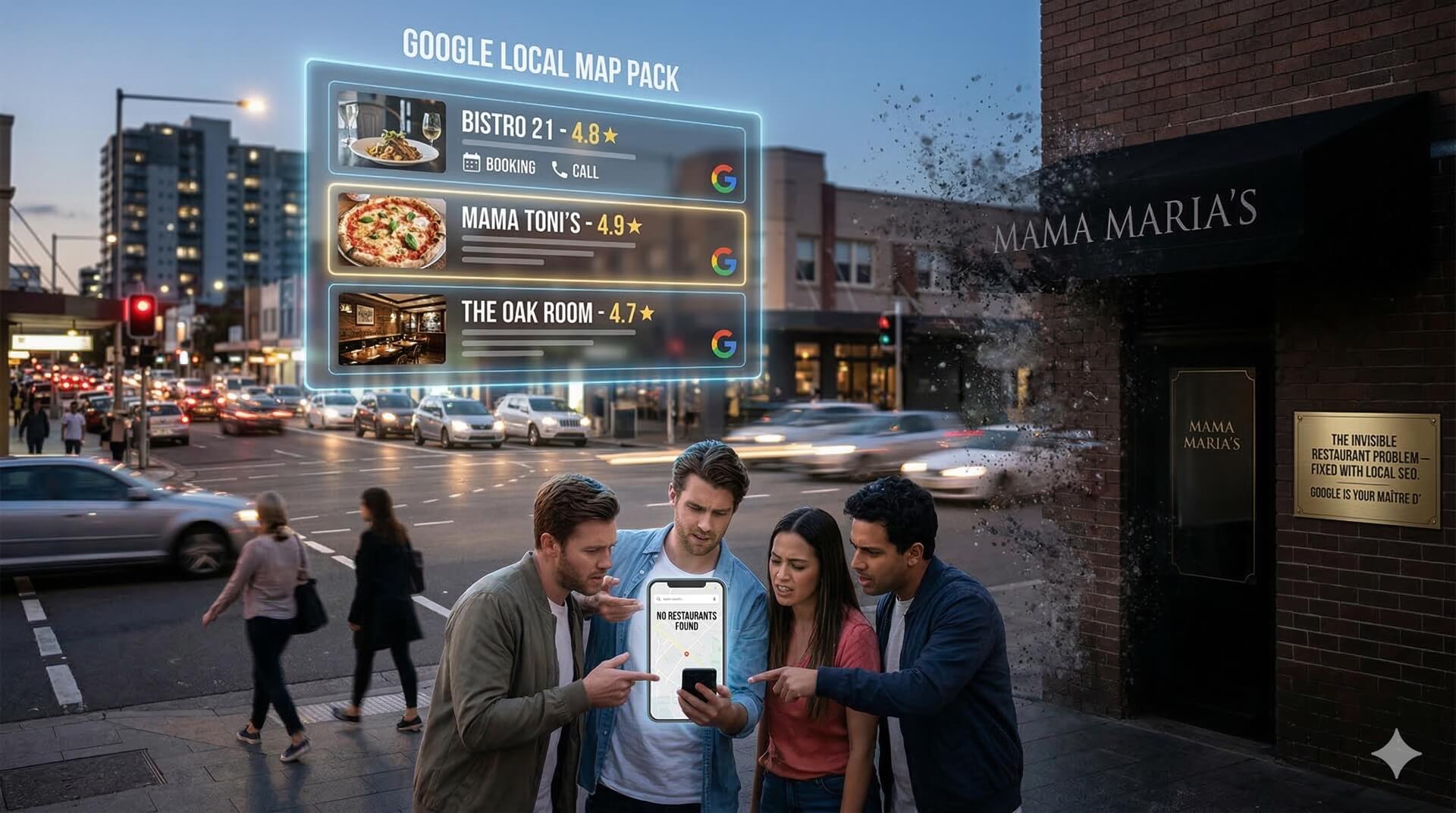
Original story and image on SEO Ninja
The Invisible Restaurant Problem — And How to Fix It with Local SEO
When someone searches "restaurants near me" on their phone, Google shows exactly three restaurants in the local map pack — and those three restaurants capture the vast majority of clicks, calls, and visits. This guide is a step-by-step playbook for getting your restaurant into that top three, covering everything from Google Business Profile optimisation to review generation to website structure. The stakes are real: 93% of diners research restaurants online before visiting, and a one-star increase in your Yelp rating leads to a 5-9% increase in revenue.
The Full Analysis: Google Is Your Most Powerful Maître D'
Picture the busiest intersection in your city. Now imagine there's a massive digital billboard at that intersection, showing exactly three restaurants every time someone drives by, hungry. That's what the Google Local Map Pack is. And right now, either you're on that billboard, or you're not. There's no middle ground.
The article starts with a striking statistic: "Near me" restaurant searches have grown by 500%. That's a tidal wave, not a trend. Restaurants that embraced local SEO are now thriving, while those who didn't are watching competitors draw more customers and wondering why.
Local SEO for restaurants isn't some mysterious technical thing that only big chains can afford. It's a set of very specific, very learnable actions that any restaurant owner can take — most of them for free — that dramatically increase your visibility when hungry people search for food in your area. The article breaks it down into four main pillars: your Google Business Profile, your reviews, your website, and your citations (which are basically your restaurant's name and address listed consistently across the internet).
The Google Business Profile: Your Free Weapon
Your Google Business Profile is the single most important piece of digital real estate your restaurant owns, and it costs you nothing. It's the box that appears on the right side of Google when someone searches for your restaurant name. It shows your hours, photos, reviews, menu, and a button to call you or get directions.
The article is specific about what makes a profile perform versus what makes it invisible. Restaurants with photos get 42% more direction requests than those without. Profiles that post weekly updates rank higher than those that sit dormant. And the category you choose — "Italian Restaurant" versus just "Restaurant" — determines which searches trigger your listing in the first place.
One detail that most restaurant owners miss: you can add your full menu with prices directly to your Google Business Profile. When someone searches for your restaurant, they can see your menu without ever leaving Google. That means they're making their decision — "yes, I want to go there" — before they even click through to your website. That's a conversion happening before the customer even arrives at your digital front door.
The Review System: Your Most Underused Marketing Tool
Reviews are not just a vanity metric. They are a ranking signal, a trust signal, and a sales tool all rolled into one. The article clearly makes the case: restaurants with more reviews and higher ratings rank higher in local search results, attract more diners, and can charge premium prices.
The key insight here is that review generation needs to be a system, not a random act. Train your staff to mention it naturally at checkout. Send a follow-up text to reservation customers with a direct link to your Google review page. Make it so easy that leaving a review takes thirty seconds. The restaurants that do this consistently end up with hundreds of reviews, while their competitors have only 12.
One warning the article gives that's worth repeating: never buy fake reviews. Google's algorithms are sophisticated enough to detect them, and the penalties — including getting your listing removed entirely — are severe. The only reviews worth having are real ones from real customers who genuinely loved their experience.
Your Strategic Steps
- Before: Being invisible on Google while your competitor down the street gets all the "near me" searches — After: Showing up in the top three local results every time a hungry person searches for your type of food…
- Before: Having a handful of reviews that make you look like a ghost town — After: A steady stream of authentic 5-star reviews that build trust before customers even walk in…
- Discover the one free Google tool that 90% of restaurant owners have, but almost nobody uses correctly — and it's the single biggest factor in your local search ranking…
- Imagine being the restaurant that locals recommend to every visitor, the one that shows up first no matter what neighbourhood someone is searching from…
- Stop losing customers to competitors who rank higher in search results, even when your food is better, and your service is friendlier…
- Avoid the NAP inconsistency trap — having your address listed differently across different websites is silently killing your search rankings right now…
- The risk is zero: your Google Business Profile is free, and optimising it takes one afternoon — the results compound for years…
Local SEO for Restaurants: The Complete Guide to Filling More Tables Through Search
Original story and image on Global Brands
The "Premium" Play — How to Charge More Without Losing Customers
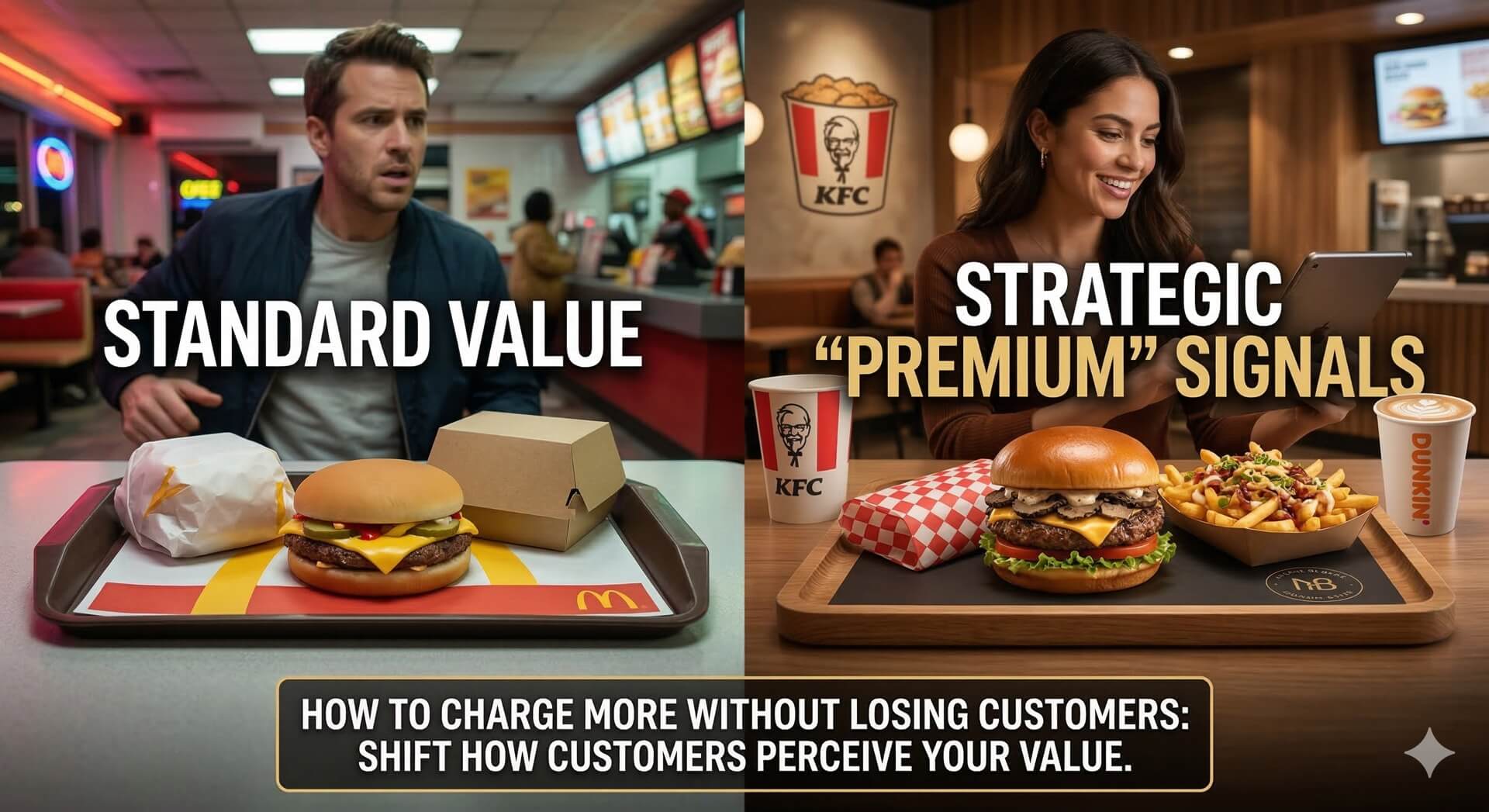
The biggest fast-food chains in the world — McDonald's, Burger King, KFC, and Dunkin' — are all quietly moving upmarket, adding premium ingredients, global flavours, and elevated experiences to their menus to attract customers willing to spend more. This "premiumisation" trend is being driven by three forces: changing customer expectations, competition from fast-casual restaurants, and the need to increase profit margins without raising prices across the board. The lesson for independent restaurant owners is powerful: you don't need to reinvent your entire menu to charge more — you just need to add a few strategic "premium signals" that shift how customers perceive your value.
The Full Analysis: Why "Good Enough" Is No Longer Good Enough
There's a quiet war happening in the restaurant industry, fought on the battlefield of perception. On one side, you have fast-food chains that used to compete purely on price and speed. On the other hand, you have fast-casual restaurants that have built their entire identity around quality and experience. And right now, the fast-food chains are crossing the line and stealing customers from both sides.
The article traces how brands like Burger King are testing Gourmet Kings menus with Wagyu beef and brioche buns. How McDonald's is rolling out signature burger collections with thicker patties and premium toppings. How KFC and Popeyes are experimenting with chicken-based pizza hybrids that feel more like a restaurant dish than a drive-through order. These aren't random experiments. They're a calculated response to a shift in customer demand.
Customers want to feel they're getting something special—not necessarily expensive, just unique. They want to say, "I had an incredible Wagyu burger at Burger King." They want a story and the experience of discovery. Restaurants that understand they sell both food and stories can charge more, attract more, and keep customers returning.
The Three Moves That Make Anything Feel Premium
The article identifies a clear three-step strategy that the big chains are using, and it translates perfectly to independent restaurants. First, create excitement — introduce a limited-time item that feels special and generates buzz. Second, increase average transaction value — the premium item pulls up the average spend without alienating your core customers who still want the regular menu. Third, attract new customers — the premium item signals quality to people who might have previously dismissed you as "not their kind of place."
For an independent restaurant, this might mean adding one or two "chef's specials" to your menu each month. Items with a story — "our chef sourced this heirloom tomato from a farm 30 miles away" — that justify a higher price point and create a reason for regulars to come back and try something new.
The global flavour angle is particularly interesting. The article notes that customers are more adventurous than ever, and fast-food chains are responding by adding Mediterranean, Asian, and Latin American influences to their menus. For an independent restaurant, this is actually an area where you can beat the chains. You have the flexibility, the creativity, and the authenticity that a corporate menu committee can never replicate. A limited-time Peruvian ceviche, a Korean BBQ flatbread, a Moroccan-spiced lamb burger — these are the kinds of things that make people feel like they've discovered something, and discovery is the most powerful marketing force there is.
The Pricing Psychology Nobody Teaches You
Here's the part of this article that most people will miss, but it's the most valuable insight: premium items don't just generate more revenue on their own—they make your entire menu look more reasonably priced by comparison.
This is called the "anchor effect" in pricing psychology. When you add a $28 dry-aged ribeye to your menu, your $18 salmon suddenly looks like a great deal. Your $14 pasta feels accessible. The expensive item at the top of the menu makes everything else feel like a bargain. The chains figured this out a long time ago. Now it's your turn.
Your Strategic Steps
- Before: Competing on price and watching your margins get thinner every year — After: Commanding premium prices for premium experiences that customers happily pay…
- Before: Having a menu that looks like every other restaurant in your area — After: Offering one or two signature items that people specifically drive across town to try…
- Discover the anchor pricing trick that makes your entire menu feel more affordable — without changing a single price…
- Imagine being the restaurant that people describe as "a hidden gem" — the place that feels special, that has a story, that makes people feel like they discovered something…
- Stop racing to the bottom on price and start building a brand that people associate with quality, creativity, and an experience worth paying for…
- Avoid the trap of trying to compete with chains on price — that's a race you will never win, and it's not the race worth running…
- The risk is zero: test one premium item this week, track how it sells, and let your customers tell you what they're willing to pay for…
Why Global Fast-Food Brands Are Entering the Premium Segment
Original story and image on McKinsey
The Future Is Here — And It's Coming for Your Restaurant
McKinsey's experts predict more culinary innovation over the next ten years than in the past fifty, driven by three converging forces: AI-powered personalisation, kitchen robotics, and a fundamental shift in how consumers think about food. The restaurant of the future won't just serve meals — it will adapt to your mood, know your health goals, and curate your entire experience before you even arrive. For restaurant owners today, the strategic implication is clear: the brands that start building data, loyalty, and personalisation systems now will have an insurmountable competitive advantage by the time these technologies become mainstream.
The Full Analysis: The Restaurant That Knows You Before You Walk In
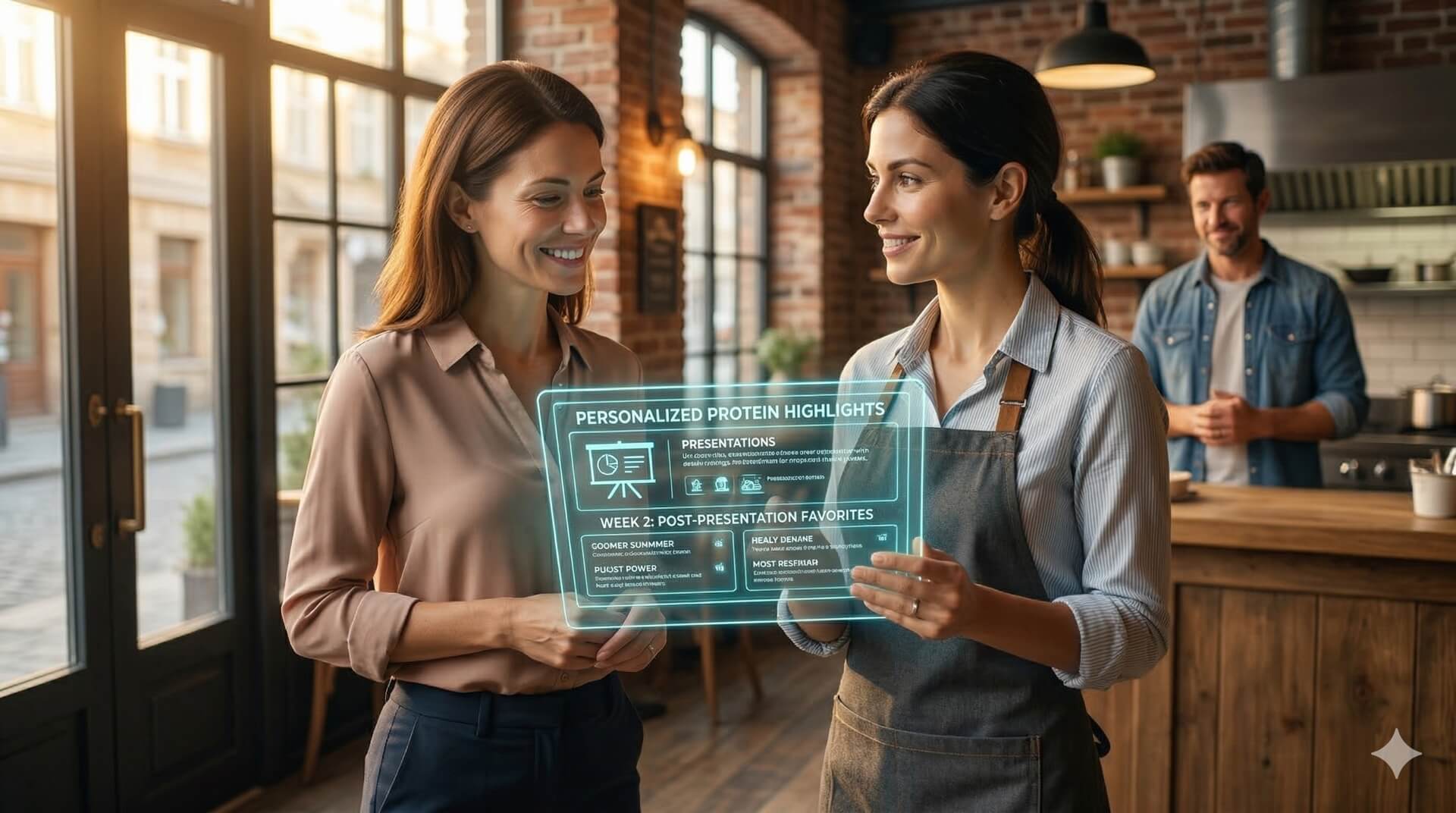
Let's play a game. Imagine you walk into your favourite restaurant, and before you even sit down, your server says, "We noticed you've been ordering more protein lately, so we've highlighted a few new dishes we think you'll love. Also, we remembered you had a big work presentation last week — hope it went well." How would that make you feel? Like a VIP. Like a regular. Like this place actually knows you.
That's not a fantasy. That's where the restaurant industry is heading, and according to McKinsey's experts, it's heading there faster than most people realise. The article describes a future where AI systems track customer preferences, health goals, and even mood indicators to create a dining experience that feels personally curated. Where agentic AI — essentially a personal AI assistant — books your table, selects your preferred seating, and communicates your dietary preferences to the kitchen before you arrive.
This might sound like science fiction, but the building blocks are already here. Loyalty programs are already collecting data. QR code ordering systems are already tracking what people order. The restaurants that are thinking about this now — that are building their data collection systems and loyalty programs with the future in mind — are the ones that will be positioned to use these tools when they become affordable and accessible.
The Two-Speed Industry: Which Lane Are You In?
One of the most important insights in this article is the idea that the restaurant industry is splitting into two distinct lanes. On one side, you have restaurants that are leaning into technology — digital ordering, AI-powered recommendations, robotic kitchen assistance, data-driven personalisation. On the other side, you have restaurants that are leaning into what makes them irreplaceable: the human story, the handmade craft, the traceable ingredients, the chef who comes out to talk to you about the dish.
Here's the critical insight: both lanes can win. But you have to pick one and commit to it. The restaurants that are struggling are the ones stuck in the middle — not tech-forward enough to compete on efficiency and personalisation, not human-forward enough to command a premium for authenticity and craft.
The article quotes McKinsey expert Katharine Mattox: "There will be some restaurants that lean into automation and digital, and that experience will become part of the brand. You may never interact with a server. And there will be others that lean into what makes them different and stand out: 'This actually is handmade; here's the story behind the ingredients, which are traceable.'"
The Data Problem — And Why You Need to Solve It Now
Here's the part of this article that should keep you up at night, in a productive way. The experts point out that many restaurants are "data-poor" — they serve hundreds of customers a day but have no idea who those customers are, what they ordered, how often they come back, or what would bring them back sooner.
Cash payments, walk-in customers, and no loyalty program — these are all data dead ends. And in a world where the restaurants of the future will be built on personalisation and data-driven marketing, being data-poor is like trying to navigate a city with no map and no GPS.
The good news is that fixing this is not complicated or expensive. A simple loyalty program — even just collecting email addresses at the point of sale — starts building the data foundation you need. A QR code menu that tracks what people order. A reservation system that logs customer preferences. These are small steps that compound into a massive competitive advantage over time.
Your Strategic Steps
- Before: Running your restaurant on gut instinct and hoping the right customers show up — After: Using customer data to predict what they want, when they'll come back, and what offer will bring them in…
- Before: Watching technology pass you by while your competitors build loyalty systems and data advantages — After: Having a clear, simple plan for building the data foundation that will power your marketing for years…
- Discover the one low-tech move you can make this week that starts building the customer data system the restaurant industry's future is built on…
- Imagine being the restaurant that feels like it knows every customer personally — the one that sends the right offer to the right person at exactly the right time…
- Stop being invisible to your own customers after they leave — the average restaurant has no idea who walked in yesterday, and that's a marketing crisis hiding in plain sight…
- Avoid the trap of waiting for technology to become "mainstream" before you start preparing — the restaurants building their data systems now will have a three-year head start on everyone else…
- The risk is zero: a simple email capture at the point of sale costs nothing and starts building the most valuable marketing asset your restaurant can own…
A taste of what’s next: Perspectives on the future of restaurants
Original story and image on Yahoo Finance
The Survival Math — Why 10% of Restaurants Won't Make It Through 2026
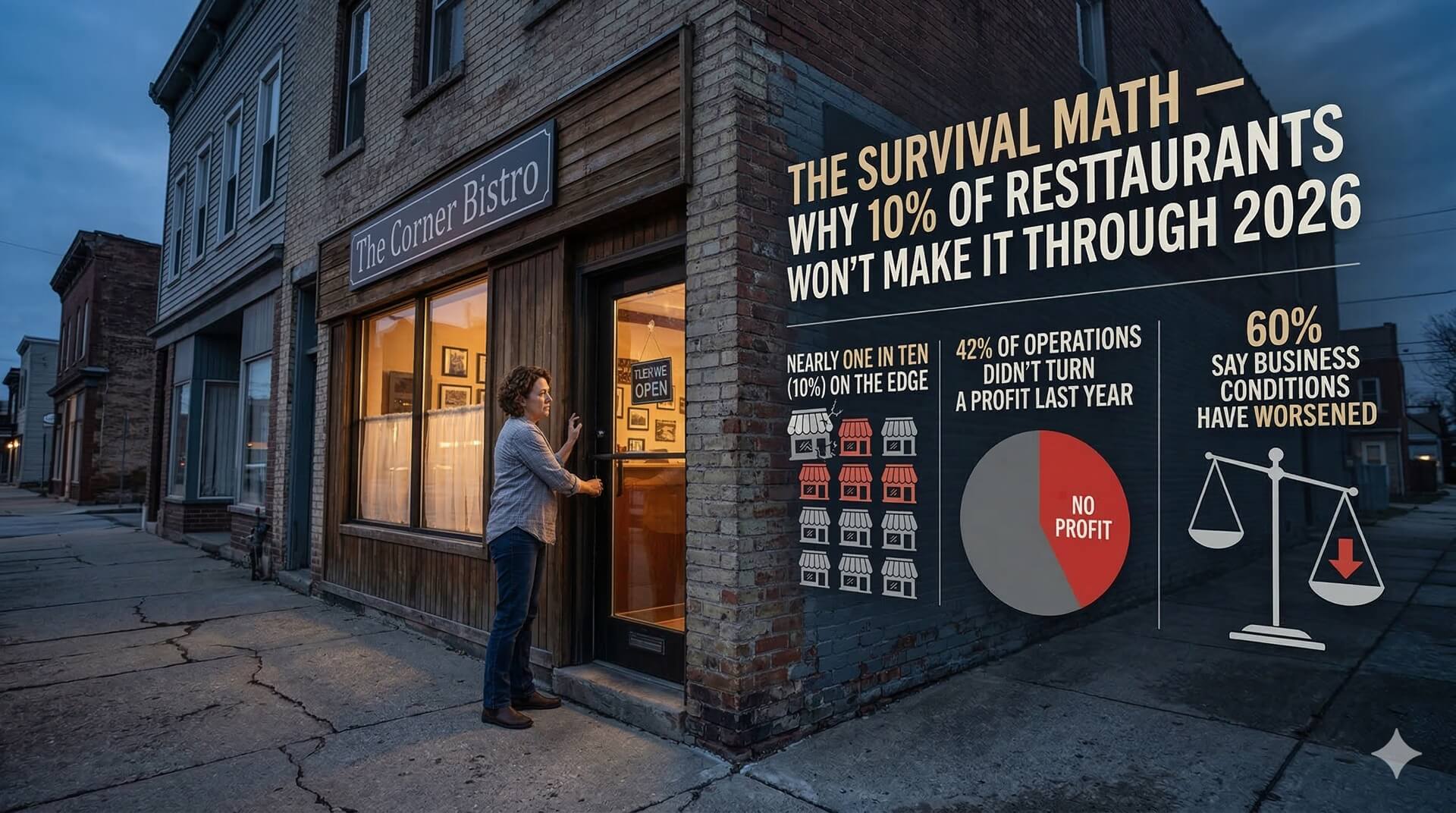
Black Box Intelligence data shows that 9% of full-service restaurants are currently "at risk" of closure, defined as operating at 70% or below their historical sales peak—and casual dining makes up a significant share of that number. The brutal math: food costs climbed 38% between 2019 and 2025, labour costs jumped 35%, and 42% of restaurants didn't turn a profit last year. The silver lining, according to Black Box VP Victor Fernandez, is that a leaner industry often becomes a stronger one, and the restaurants that survive will be able to capture the customers and market share of those that don't.
The Full Analysis: This Is the Most Important Article You'll Read All Week
Let's not sugarcoat this. The restaurant industry is in a fight for its life right now, and the data is stark. Nearly one in ten full-service restaurants is on the edge. Forty-two percent of operations didn't turn a profit last year. Sixty per cent say business conditions have worsened. These aren't abstract statistics — these are your neighbours, your colleagues, the restaurants you've eaten at for years.
But here's what the article gets right that most doom-and-gloom coverage misses: this is also the greatest opportunity for the restaurants that survive. When a restaurant closes, its customers don't stop eating out. They go somewhere else. They become available. They're looking for a new favourite spot. And the restaurants that have strong marketing systems, loyal customer bases, and clear brand identities are the ones that will capture those customers.
The article quotes Victor Fernandez from Black Box Intelligence with a line that should be printed and taped to every restaurant owner's office wall: "When a brand stops subsidizing its bottom 10 percent of units, it can reallocate capital, management attention, and marketing spend to the units with the highest growth potential. This 'traffic transfer' effect is a powerful tool for survival."
The Marketing Implication Nobody Is Talking About
Here's the strategic insight that this article points to but doesn't quite say out loud: right now, in your market, there are customers who are about to lose their favourite restaurant. They're going to be looking for somewhere new to go. They're open to trying something different. They're going to be ready to become loyal to a new place.
The restaurants that are marketing aggressively right now — building their email lists, running targeted social media ads, showing up consistently in local search results — are the ones that will capture those displaced customers. The restaurants that go quiet and hope things get better are the ones that will be fighting for scraps.
This is the moment to double down on marketing, not pull back. Not because things are going great, but precisely because they're not. The restaurants that market through the hard times are the ones that come out the other side with a bigger customer base and a stronger brand than they had going in.
The "Traffic Transfer" Strategy
The concept of "traffic transfer" that Fernandez mentions is worth unpacking, because it's one of the most powerful and underutilised ideas in restaurant marketing. When a competitor closes, their regular customers are suddenly in play. They're actively looking for a new spot. They're open to suggestions. They're ready to be won over.
The restaurants that win those customers are the ones that are visible, top-of-mind, and have a clear reason for customers to choose them. That means being active on social media. That means showing up in local search results. That means having a loyalty program that gives new customers a reason to come back a second time, and a third time, until they're regulars.
The math is simple: if a competitor with 200 loyal regulars closes, and you capture even 20% of those customers, that's 40 new regulars. At an average spend of $50 and 2 visits per month, that's $4,000 in additional monthly revenue. From one competitor closing. That's not a silver lining — that's a strategy.
Your Strategic Steps
Before: Watching competitors close and feeling the industry shrink around you — After: Capturing displaced customers and growing your loyal base while others retreat…
•Before: Pulling back on marketing because times are tough and budgets are tight — After: Investing strategically in the marketing channels that bring in new customers and keep existing ones loyal…
•Discover the "traffic transfer" strategy that turns your competitors' closures into your biggest growth opportunity of the year…
•Imagine being the restaurant that grows its customer base during the hardest year the industry has seen — the one that comes out of 2026 stronger than it went in…
•Stop treating marketing as an expense to cut when times get hard — it's the one investment that directly determines whether you're in the 90% that survives or the 10% that doesn't…
•Avoid the fatal mistake of going quiet on social media, search, and email when business gets slow — silence is the fastest way to become invisible to the customers you need most…
•The risk is zero: the marketing moves that capture displaced customers cost less than you think and pay back more than you can imagine…
Doing Rounds of The Kitchen Table
We hope you have enjoyed this week's fresh serve of news from the Catering and Restaurant Industry.
SCK will keep you up-to-date with the latest in Catering Equipment & Restaurant Equipment, Food Trends & Business Tips from around the web.
Let us do the hard work and source the right equipment for your Restaurant or Commercial Kitchen
Our goal at SCK is to sell you products that add value to your business.
We power your kitchen!
Sydney Commercial Kitchenshttps://uploads.prod01.sydney.platformos.com/instances/647/assets/modules/homepage/images/sck.svg?updated=1792410135
Join our newsletter
Receive this and other great industry information by signing up to our newsletter
Subscribe