
How Can Commercial Kitchens Keep Chips Crispy? A Complete Guide to Frying, Storage and Serving
https://uploads.prod01.sydney.platformos.com/instances/647/assets/modules/homepage/webapp_uploads/blog/images/busy-commercial-kitchen-with-golden-fries1794316715405-1794317007154.jpg?updated=1794317011&updated=1795514775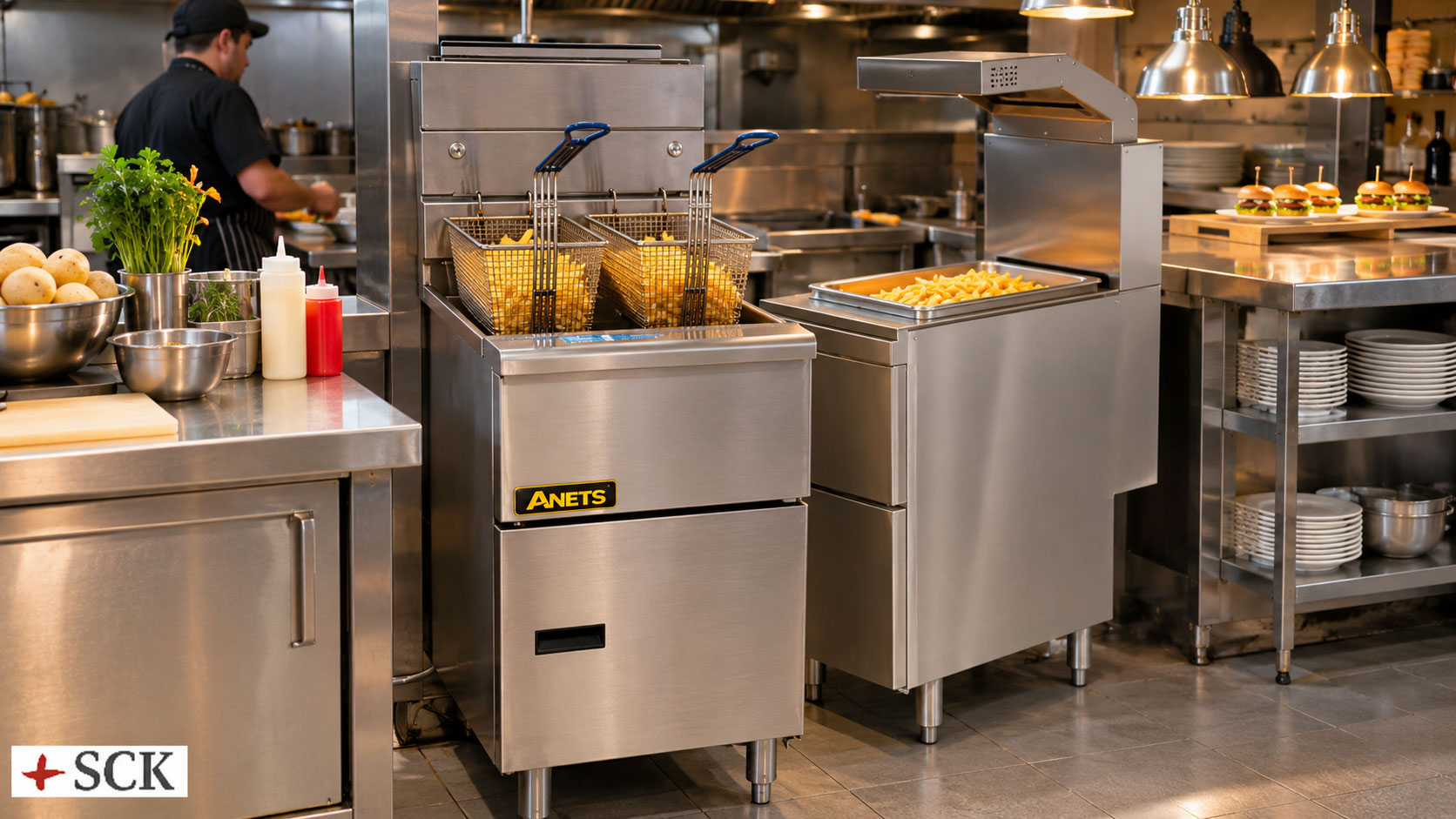
Crispy, golden chips are a favourite across Australian pubs, cafés, restaurants, clubs and takeaway shops. Yet delivering consistently good chips during a busy service requires more than a quality deep fryer. The way chips are stored, cooked, drained, held and served can make the difference between a satisfying side dish and a disappointing customer experience.
A well-planned commercial chip frying station brings these processes together. With suitable refrigeration, correctly sized frying equipment and effective chip holding solutions, hospitality businesses can improve consistency, reduce unnecessary waste and keep orders moving.
This guide explains how to build an efficient chip frying workflow, choose appropriate commercial kitchen equipment and avoid common mistakes that affect food quality and profitability.
Why Do Chips Become Soggy in Commercial Kitchens?
Chips become soggy when moisture accumulates, oil is not properly drained or cooked chips are held under unsuitable conditions.
During frying, moisture escapes from the potato as steam while the exterior develops a crisp crust. Once the chips leave the fryer, that crust can soften if steam becomes trapped or moisture moves from the centre towards the surface.
Several factors contribute to disappointing results:
- Overloading fryer baskets and causing excessive oil temperature drops.
- Cooking chips before the oil has recovered to the required temperature.
- Allowing fried chips to sit in accumulated oil.
- Piling hot chips into deep containers that trap steam.
- Holding chips too long before serving.
- Using degraded frying oil or unsuitable cooking procedures.
The solution is not simply to increase the fryer temperature. Commercial kitchens need to manage the entire process, from frozen storage through to final service.
What Equipment Does a Commercial Chip Frying Station Need?
A practical chip frying station generally combines three essential functions: storage, cooking and holding.
Each component should support the next stage of preparation without creating unnecessary movement or congestion.
1. Refrigerated or Frozen Chip Storage
Keeping chips close to the frying station reduces unnecessary trips across the kitchen and helps staff respond quickly during busy service periods.
Commercial freezer drawers can be particularly useful in compact kitchens where every metre of preparation space matters.
The original Sydney Commercial Kitchens article featured the Adande VCC1.GCW refrigerated drawer system. This type of equipment demonstrates how underbench refrigeration can support a streamlined frying workflow.
Adande's refrigerated drawer concept allows operators to configure suitable models for different temperature requirements, including frozen food storage.
For frozen chips, the important considerations include maintaining the manufacturer's specified storage temperature, preserving product quality and ensuring the refrigeration system can cope with frequent drawer openings.
Operators should consider drawer capacity, temperature recovery, ventilation requirements and ease of cleaning before selecting a unit.
A refrigerated drawer should not be assumed suitable for frozen storage without checking its actual operating range and specifications.
2. Commercial Deep Fryers
The fryer is the central piece of equipment in a chip production station.
Commercial deep fryers are designed for repeated cooking cycles, helping kitchens maintain consistent oil temperatures while processing multiple batches.
The correct fryer depends on how many portions the kitchen needs to produce, how frequently orders arrive and whether other fried foods share the same cooking equipment.
A small café serving occasional chips has different requirements from a busy pub preparing hundreds of portions during lunch and dinner.
Explore the commercial deep fryers available from Sydney Commercial Kitchens to compare gas and electric configurations, capacities and installation options.
3. Commercial Chip Dumps and Holding Stations
A commercial chip dump provides a dedicated area for draining, seasoning and temporarily holding cooked chips.
Many units incorporate perforated trays, overhead heating and accessible serving areas.
The original article featured the Culinaire CH.CD.B.11 countertop chip dump, which uses infrared heating and a perforated tray to assist with holding and serving.
A well-designed chip holding station can help kitchen staff manage the gap between fryer output and order collection.
However, heated holding equipment does not restore chips that have already become soggy. It should be used to support prompt service, not to compensate for poor frying practices or excessive holding periods.
Which Commercial Deep Fryer Brands Are Worth Considering?
Sydney Commercial Kitchens offers several established commercial fryer brands. Rather than comparing every manufacturer, it makes sense to focus on a few options that represent different operating requirements.
Frymaster: For High-Volume Frying Operations
Frymaster is a specialist commercial frying equipment brand commonly considered for busy restaurants, pubs, takeaway businesses and other high-output kitchens.
Depending on the model, Frymaster equipment may offer electronic controls, programmable cooking functions and oil management features.
These can be valuable when a kitchen needs consistent cooking results across multiple shifts or different staff members.
For high-volume operators, oil filtration arrangements, recovery performance and cleaning requirements are particularly important.
A suitable Frymaster model may be worth considering where frying is a major part of the menu and daily production volume justifies investment in specialised equipment.
Anets: For Practical Commercial Frying
Anets was featured in the original SCK article and remains listed within the website's commercial deep fryer categories.
Anets offers commercial frying equipment with different heating arrangements, including tube-type and open-pot configurations.
These designs have different implications for cleaning, heat transfer and maintenance.
For restaurants and takeaway operators, the key is selecting a fryer that can maintain suitable cooking conditions throughout service while remaining practical for staff to operate and clean.
Anets is worth considering when reviewing dedicated commercial frying solutions rather than general-purpose cooking equipment.
Cobra: For Compact and Medium-Volume Kitchens
Cobra provides commercial cooking equipment suited to hospitality kitchens requiring straightforward, functional appliances.
The Cobra CF2, for example, is listed by SCK as a gas fryer with an 18-litre oil capacity and two baskets.
This configuration may suit restaurants, cafés and takeaway kitchens looking for a freestanding fryer without the footprint of a larger multi-pan system.
Its suitability still depends on actual portion demand, cooking cycle times, installation requirements and the wider kitchen layout.
For many smaller operations, choosing a correctly sized fryer is more sensible than purchasing the largest available model.
Which brand should you choose?
Frymaster is worth investigating for demanding, high-output frying, Anets for specialist commercial fryer configurations and Cobra for practical applications where kitchen space and production requirements need to be balanced.
These are starting points for comparison rather than universal rankings. Individual model specifications, service support and operating costs matter more than brand reputation alone.
Gas or Electric Deep Fryers: Which Is Better for Chips?
Both gas and electric commercial fryers can produce excellent chips when correctly sized and operated.
The most suitable option depends on the venue's available services, installation requirements, kitchen layout and expected production volume.
Gas Deep Fryers
Gas fryers are common in busy commercial kitchens and are available in a variety of freestanding configurations.
They can be suitable for high-output operations where the kitchen already has an appropriate gas supply.
Important considerations include burner design, heat recovery, gas consumption, ventilation and servicing.
Gas models should be compared using their actual specifications rather than assuming every gas fryer is faster or cheaper to operate.
Electric Deep Fryers
Electric fryers are available in countertop and freestanding configurations, with different electrical requirements depending on their size and output.
They can be practical for venues with suitable electrical capacity or kitchens where gas installation is undesirable.
Some electric models offer precise temperature controls and efficient heat transfer.
However, larger commercial electric fryers may require dedicated electrical circuits or three-phase power.
Before purchasing either type, check the available utilities, ventilation and installation requirements with qualified professionals.
How Do You Choose the Right Fryer Capacity?
Fryer capacity should reflect the number of portions required during the busiest service period, not simply the number of customers visiting throughout the day.
A restaurant serving 150 portions across an entire day may need a different setup from a takeaway shop serving the same number within two hours.
Start by considering three factors.
Peak demand: Estimate how many portions of chips must be produced within your busiest 15 to 30 minutes.
Batch output: Determine how many portions can be cooked in each basket without overloading it.
Cooking and recovery time: Allow for the full cooking cycle, including loading, frying, draining and oil temperature recovery.
For example, a kitchen needing 60 portions per hour and producing 10 portions per complete batch cycle would require six successful cycles per hour.
This is an illustrative calculation, not a recommended loading rate. Actual output depends on chip size, product specifications, basket capacity, oil temperature and the fryer's recovery performance.
Operators should also allow some spare production capacity for unexpected orders and other fried menu items.
A fryer operating at its absolute maximum throughout service leaves little room for demand fluctuations.
How Can Kitchens Keep Frozen Chips in Better Condition?
Frozen chips are widely used in commercial kitchens because they offer consistent portioning, reduced preparation labour and predictable cooking procedures.
However, poor storage can undermine these advantages.
Frozen chips should remain at the temperature specified by the supplier, generally around -18°C or colder for long-term frozen storage, unless the product instructions specify otherwise.
Avoid leaving unopened cartons or opened bags at room temperature for extended periods during preparation.
Repeated temperature fluctuations can encourage ice crystal formation, clumping and deterioration in product quality.
Where appropriate, transfer stock into suitable food-safe containers or keep packaging properly closed to reduce exposure to moisture and contamination.
Use stock rotation procedures so older inventory is used before newer deliveries, while following use-by dates and manufacturer guidance.
For high-volume kitchens, locating suitable frozen storage near the frying station can reduce handling time and improve workflow.
What Is the Best Way to Fry Chips Consistently?
Consistency starts with repeatable cooking procedures.
Different chip products require different cooking temperatures and times, so kitchens should follow the manufacturer's instructions and validate their procedures for the equipment being used.
Many commercial frozen chips are cooked within a general range of approximately 175–180°C, but the correct settings depend on the product and fryer.
The following practices help maintain reliable results:
- Preheat the fryer to the required operating temperature.
- Use consistent batch sizes and avoid overloading baskets.
- Allow the oil temperature to recover between batches.
- Follow the recommended cooking time and check the finished product.
- Drain excess oil immediately after cooking.
- Transfer chips promptly to an appropriate serving or holding area.
Staff should also monitor oil condition and follow documented cleaning and filtration procedures.
Changing cooking temperatures randomly during service can lead to inconsistent colour, texture and cooking results.
A standardised procedure makes it easier to train staff, maintain product quality and identify problems when results change.
How Do Commercial Chip Dumps Help Maintain Crispiness?
Commercial chip dumps are designed to make the final stage of frying more manageable.
Once chips leave the fryer, excess oil needs somewhere to drain, while the product must remain accessible for seasoning and serving.
A perforated holding tray helps separate chips from oil and crumbs.
Overhead heating may assist in maintaining warmth, depending on the equipment design and operating conditions.
However, airflow and holding time remain important.
Deep piles of chips can trap steam, causing the lower layers to soften. Overcrowding a holding tray can also make it harder for staff to maintain consistent portion sizes.
A practical chip holding procedure should include regular tray cleaning, manageable batch quantities and a defined maximum holding time based on food quality and safety requirements.
For businesses with continuous takeaway demand, a dedicated chip dump can reduce congestion around the fryer and provide a more organised service point.
What Food Safety Rules Apply to Cooked Chips?
Australian food businesses must manage food safety according to applicable food standards and their operating requirements.
Potentially hazardous food generally needs to be kept at 5°C or colder, or 60°C or hotter, unless an applicable alternative control is used.
Whether a particular cooked chip product is classified as potentially hazardous depends on its characteristics and handling conditions.
Operators should not assume that overhead heating automatically provides compliant hot holding.
Where hot holding is required, use suitable equipment and verify the food temperature with an appropriate thermometer.
The Australian New Zealand Food Standards Code, including Standard 3.2.2, provides relevant food handling requirements.
For official guidance, consult Food Standards Australia New Zealand and your relevant state or territory food authority.
The safest approach is to develop procedures that address both food safety and product quality rather than relying on appearance alone.
How Can Commercial Kitchens Reduce Frying Oil Waste?
Frying oil is an ongoing operating expense, particularly for businesses serving large quantities of chips, seafood, chicken and other fried foods.
Poor oil management can increase costs and affect the flavour, appearance and consistency of finished products.
Effective oil management begins with choosing the correct oil for the application and maintaining suitable cooking temperatures.
Overheating can accelerate oil deterioration, while allowing excessive crumbs and food particles to accumulate can contribute to poor frying results.
Commercial kitchens should establish a routine for filtering oil where appropriate, removing debris and inspecting oil condition.
Oil should be replaced according to its condition, manufacturer recommendations and the kitchen's documented food safety procedures.
Some commercial fryers offer integrated filtration systems that can simplify maintenance and reduce manual handling of hot oil.
However, these features should be assessed against the initial purchase cost, maintenance requirements and expected daily usage.
For smaller kitchens, a straightforward filtration procedure may be sufficient. Higher-volume operations may benefit from equipment designed to make frequent oil management more practical.
Never add water to hot frying oil or attempt to move a fryer containing hot oil. Staff should be trained in safe oil handling and disposal procedures.
What Common Mistakes Should Kitchens Avoid When Setting Up a Chip Frying Station?
Even good commercial equipment can produce disappointing results when the kitchen layout or operating procedures are unsuitable.
One common mistake is purchasing a fryer based only on oil capacity. A larger oil tank does not automatically guarantee greater output. Heating performance, basket design and recovery time are equally important.
Another mistake is positioning the chip holding station too far from the fryer. Staff then spend unnecessary time transferring hot food, increasing handling and potentially affecting product quality.
Other problems include inadequate ventilation, insufficient frozen storage, poor oil filtration procedures and using chip dumps for excessive holding periods.
Kitchens should also avoid placing refrigeration equipment where surrounding heat prevents it from operating effectively. Always follow the manufacturer's installation clearances and ventilation requirements.
Before purchasing equipment, consider the complete preparation and service process rather than treating each appliance as an isolated investment.
How Would an Efficient Chip Frying Station Work in a Busy Australian Pub?
Consider a busy suburban pub serving burgers, steaks, schnitzels, fish and chips, and children's meals.
During a typical lunch service, the kitchen receives orders from several tables within minutes.
Without a coordinated frying station, staff may need to retrieve frozen chips from a distant freezer, wait for an overloaded fryer to recover and compete for bench space when plating orders.
A more efficient arrangement places suitable frozen chip storage near the fryer, with a dedicated chip dump positioned conveniently for draining, seasoning and serving.
The fryer is selected according to peak demand rather than average daily sales.
Staff follow consistent cooking procedures, while the holding station provides a short-term buffer between frying and plating.
During quieter periods, the kitchen prepares smaller batches to avoid unnecessary waste.
During peak service, staff coordinate batch sizes with incoming orders to maintain a steady supply of freshly cooked chips.
The result is a more organised workflow, with less unnecessary movement and better opportunities to maintain consistent food quality.
This approach is relevant beyond pubs. Takeaway shops, clubs, hotel kitchens and catering operations can apply similar principles according to their menus and service requirements.
Is Investing in a Complete Chip Frying Station Worth It?
For businesses where chips represent a substantial portion of sales, a well-designed frying station can be a worthwhile operational investment.
The financial benefits depend on the existing equipment, labour costs, order volume, energy consumption and food waste.
Rather than assuming a particular return on investment, operators should assess where their current process creates unnecessary expense.
For example, if staff repeatedly leave the cooking line to retrieve frozen stock, nearby storage may improve efficiency.
If a fryer struggles to maintain temperature during busy periods, a better-suited model may improve output consistency.
If cooked chips regularly become soggy while waiting for service, a dedicated holding arrangement and improved batch management may reduce waste.
The objective is not necessarily to purchase more equipment. It is to select the combination that solves the kitchen's actual operational problems.
A compact takeaway business might need only a suitable fryer and a small holding station, while a high-volume venue may benefit from multiple fryers, refrigerated drawers and larger chip holding equipment.
Frequently Asked Questions About Commercial Chip Frying Stations
What temperature should commercial kitchens fry chips at?
Many commercial frozen chips are prepared at approximately 175–180°C, although the correct temperature depends on the product and equipment. Follow the chip manufacturer's cooking instructions and maintain consistent fryer settings.
Why do chips become soggy after frying?
Chips can lose crispiness when excess oil remains on the surface, steam becomes trapped or they are held too long. Proper draining, suitable holding equipment and prompt service help preserve texture.
Are gas or electric fryers better for commercial kitchens?
Both can deliver consistent results. Gas fryers may suit kitchens with existing gas infrastructure, while electric fryers can be practical where appropriate electrical services are available. Compare actual capacity, recovery performance and operating requirements.
Do commercial chip dumps keep chips crispy?
Chip dumps can help drain excess oil and provide short-term heated holding. However, they cannot prevent all quality deterioration. Appropriate batch sizes, airflow and limited holding times remain essential.
How many fryers does a busy restaurant need?
The number depends on peak order volume, fryer output, cooking times and whether chips share equipment with other fried foods. Some kitchens benefit from separate fry tanks to improve workflow and manage different menu items.
Can frozen chips be stored beside a commercial fryer?
Frozen chips can be stored in suitable commercial freezer equipment positioned near the fryer, provided the refrigeration system is installed according to manufacturer requirements and can maintain safe temperatures despite surrounding heat.
How often should commercial frying oil be changed?
There is no universal replacement schedule. Oil condition depends on cooking temperature, food type, filtration, usage and contamination. Operators should monitor oil quality and follow appropriate maintenance and food safety procedures.
What is the most important equipment in a chip frying station?
The commercial deep fryer is central to cooking performance, but frozen storage and suitable chip holding arrangements also influence workflow and final product quality. The best results come from coordinating all three functions.
Build a Better Chip Frying Station with Sydney Commercial Kitchens
Consistently crispy chips depend on more than the frying process itself.
From frozen storage and fryer selection to draining, holding and serving, each stage influences food quality, kitchen efficiency and customer satisfaction.
For Australian hospitality businesses, investing in suitable equipment and developing reliable operating procedures can help reduce unnecessary waste, improve workflow and deliver more consistent results during busy service periods.
Sydney Commercial Kitchens supplies commercial cooking equipment for cafés, restaurants, pubs, clubs, takeaway businesses and larger foodservice operations.
Whether you are upgrading an existing fryer, planning a new takeaway kitchen or reviewing your entire chip preparation process, choosing equipment around your actual production requirements is the best starting point.
Explore the Sydney Commercial Kitchens commercial deep fryer range or speak with the team about suitable equipment for your kitchen.
Want help with this product? Call SCK now on 1300 881 119!
Make your business our next satisfied client
If you are looking to buy equipment for your cafe or restaurant at the best price, then let us do the hard work and source the right product for your restaurant, cafe, takeaway or commercial kitchen.
Our goal at SCK is to sell you products that add value to your business.
We power your kitchen!
Sydney Commercial Kitchenshttps://uploads.prod01.sydney.platformos.com/instances/647/assets/modules/homepage/images/sck.svg?updated=1795514775