
How do I size/capacity a Commercial Spiral Mixers for my business?
Our AI Chef Says
When sizing a commercial spiral mixer for your business, there are several key factors to consider to ensure you select the right model that meets your production needs. Here’s a clear guide to help you through the process:
1. **Production Volume**: Consider how much dough you anticipate producing on a daily basis. This includes understanding your busiest times and any peaks in production. Spiral mixers are often rated by the weight of the finished dough they can handle; make sure to choose a model that can comfortably manage your maximum output.
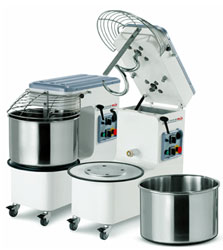
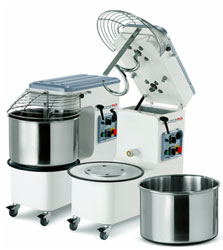
2. **Bowl Capacity**: The bowl capacity is crucial as it directly correlates to how much flour and water can be mixed. For example, a mixer like the Mecnosud SMM1130 has a bowl capacity of 200L and can handle up to 130kg of finished product, making it suitable for high-volume operations. Match the bowl size with your daily requirements, keeping in mind that you will need some capacity headroom.
3. **Type of Products**: Different recipes may require different mixing times and techniques. For instance, if you're primarily making pizza dough or artisan bread, you'll want to select a mixer that can accommodate the required hydration levels. Mixers like the Mecnosud SMM0018, which is ideal for smaller pizza and bakery shops, might be fitting for low-volume operations but may not suffice for larger bakeries.
4. **Mixing Speed and Power**: Look for a mixer with multiple speed settings if you require versatility for different types of doughs. Some models, such as the Mecnosud SMM1060, come with dual motors and automatic timers, which can enhance efficiency in your mixing process.
5. **Space and Layout**: Assess the physical space you have in your kitchen. Ensure that the size of the mixer will fit in your workflow, allowing for efficient operation and easy movement of ingredients. Models with tilting heads, like the Mecnosud SMM0018, are also more user-friendly in tight spaces.
6. **Maintenance and Installation Needs**: Consider whether the mixer will need professional installation and if you are prepared for ongoing maintenance, especially for high-capacity models that may require a three-phase power supply.
7. **Budget**: Finally, keep your budget in mind. While investing in quality equipment is essential, there are options available across various price points. A higher initial investment in a robust model may save you costs in maintenance and replacements down the line.
Ultimately, by analysing your production needs against these parameters, you’ll be able to select a spiral mixer that optimally supports your business's growth and efficiency. If you need further assistance or specific recommendations, feel free to reach out for support.
Was this helpful?
0
Ask The Chef A New Question
Need More Help?
Feedback Received
Thank you for your feedback! This helps us improve our knowledge base.