
How do I size/capacity a Commercial Mixers for my business?
Our AI Chef Says
When sizing a commercial mixer for your business, there are several factors to consider to ensure you select the right equipment for your needs. Here are the key points to help guide your decision:
1. **Production Capacity**: Determine how much product you need to mix at one time. Commercial mixers come in various sizes, with capacities ranging from smaller models (for instance, 20 kg) to larger ones (up to 80 kg or more). Think about your daily production volume and consider a mixer that can efficiently handle your largest batch size. For example, if you're running a bakery that requires large amounts of dough regularly, a mixer like the Mecnosud SMF0080, which can handle up to 80 kg of finished product, may be more suitable.
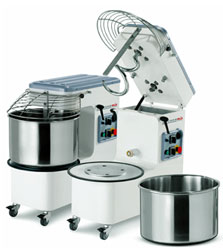
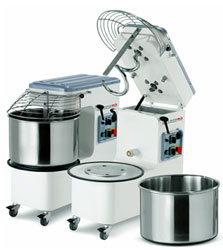
2. **Type of Production**: Consider what you're mixing. If you specialize in different products, some mixers may be better suited to specific tasks. Spiral mixers, for instance, are ideal for pizza and bakery products because they're designed to effectively incorporate air and maintain dough elasticity. The Mecnosud SMM0044, for example, is a 44 kg spiral mixer suitable for pizza and bakery shops.
3. **Space and Footprint**: Assess your kitchen's layout and the space available for the mixer. Ensure there's enough room for the mixer itself, as well as for any additional accessories or feet and castors for mobility. This is an essential factor, especially in a commercial kitchen where space can be limited.
4. **Type of Mixer**: There are different types of mixers, including spiral mixers, planetary mixers, and forked mixers. Each serves a specific purpose:
- **Spiral Mixers** (like the Mecnosud SMM9925) are excellent for bread and pastry dough due to their ability to handle heavy doughs while maintaining optimal mixing speed.
- **Planetary Mixers** are more versatile and can mix a variety of products (batter, cream, dough) but may not be as effective for large quantities of heavy dough.
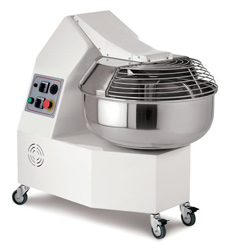
- **Forked Mixers** (like the Mecnosud SMF0080) work well for larger batches and can be suitable for traditional dough mixing.
5. **Power and Energy Efficiency**: Make sure to consider the power requirements of the mixer, especially in relation to your kitchen's electrical setup. Many commercial mixers will need a 3-phase supply. For instance, the Mecnosud SMF0080 operates on a 400V supply, so it's crucial to ensure your kitchen can accommodate this.
6. **Features**: Look for features that suit your production style, such as timers, variable speeds, and safety guards. For example, a timer can help manage mixing times, ensuring consistency, and a safety guard is crucial for operational safety.
7. **Warranty and Support**: Lastly, consider the warranty provided by the manufacturer. Brands like Mecnosud offer warranties of various lengths (e.g., 12 months for parts and labour), which service can be beneficial for long-term use.
By evaluating these factors, you can make an informed decision about the appropriate size and type of commercial mixer for your business. If you need further assistance, Sydney Commercial Kitchens is always here to help guide you through the selection process or provide more specific recommendations based on your individual needs.
Was this helpful?
0
Ask The Chef A New Question
Need More Help?
Feedback Received
Thank you for your feedback! This helps us improve our knowledge base.