
Compare a Eswood SW500 vs a Meiko Upster U 500 dishwasher
Our AI Chef Says
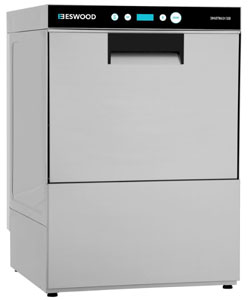
When comparing the Eswood Smartwash SW500 and the Meiko Upster U 500 dishwashers, it's important to assess various factors such as performance, efficiency, features, and usability. Let's break down both models.
### Eswood Smartwash SW500
**Key Features:**
- **Intelligent 'One Touch' Operation**: Simplifies the washing process with a user-friendly interface.
- **Cycle Time**: Offers 3 wash cycle options: 90, 120, and 180 seconds, along with a special 6-minute SCRUB cycle suited for heavily soiled items.
- **Drain Pump**: Comes with a drain pump as standard, facilitating efficient water disposal.
- **Temperature Management**: Includes digital displays for both wash and rinse temperature, which is ideal for HACCP compliance.
- **Self-Cleaning Cycle**: This feature ensures the dishwasher is maintained without manual intervention, enhancing hygiene.
- **Water Usage**: Efficient water consumption makes it an economical choice for businesses.
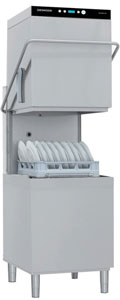
### Meiko Upster U 500
**Key Features:**
- **Performance**: Known for its robust performance in demanding environments, suitable for restaurants and catering operations.
- **Cycle Time**: Provides adjustable cycle times similar to the Eswood, but specific times can vary; generally ranges from 120 to 180 seconds.
- **Energy Efficiency**: Designed with eco-friendly operations in mind, often featuring heat recovery options to recycle energy.
- **Hygiene and Cleaning**: Offers excellent wash results with high-temperature rinse options and effective filtration systems.
- **Compact Size**: Ideal for establishments with limited space, providing a good balance between capacity and footprint.
### Comparison
1. **Ease of Use**: The Eswood SW500’s 'One Touch' interface may be easier for staff to operate compared to the Meiko model, which may have a steeper learning curve depending on the specific version.
2. **Cycles and Flexibility**: Both dishwashers allow for quick cleaning, but the Eswood offers a dedicated SCRUB cycle for tough jobs, which could be advantageous if your kitchen often deals with heavily soiled dishes.
3. **Energy and Water Efficiency**: Both are designed to be efficient. The Meiko Upster is typically noted for its energy-saving features, while the Eswood SW500 has a low water consumption per cycle, which can significantly lower operating costs.
4. **Maintenance and Cleaning**: The self-cleaning feature of the Eswood SW500 is a notable convenience, making maintenance easier compared to traditional models, including the Meiko.
5. **Installation and Space**: Check the dimensions of both units to ensure they fit your kitchen layout comfortably. The Meiko Upster is compact, making it suitable for smaller spaces.
In summary, both the Eswood Smartwash SW500 and Meiko Upster U 500 offer strong performance for commercial dishwashing needs. If ease of use and self-cleaning features are priorities, the Eswood might be the better choice. However, if energy efficiency and robust performance are more critical, the Meiko could be the right fit for your kitchen. Always consider your specific operational needs and budget when making a final decision.
For prices and any other queries, you can refer to Sydney Commercial Kitchens for comprehensive product details and options.
Was this helpful?
0
Ask The Chef A New Question
Need More Help?
Feedback Received
Thank you for your feedback! This helps us improve our knowledge base.